The seasons are a- stirring. The Sun is poking through, the mud is beginning to dry and the birds are a-singing. Hoorah! This month’s wild drawing exercise takes a moment to tune into the sonic signs of Spring coming her way. At the end of this short newsletter I share my favourite drawing exercise led by the sense of hearing.
Firstly though, here are my March finds:
Happenings across
A few findings collected along the way:
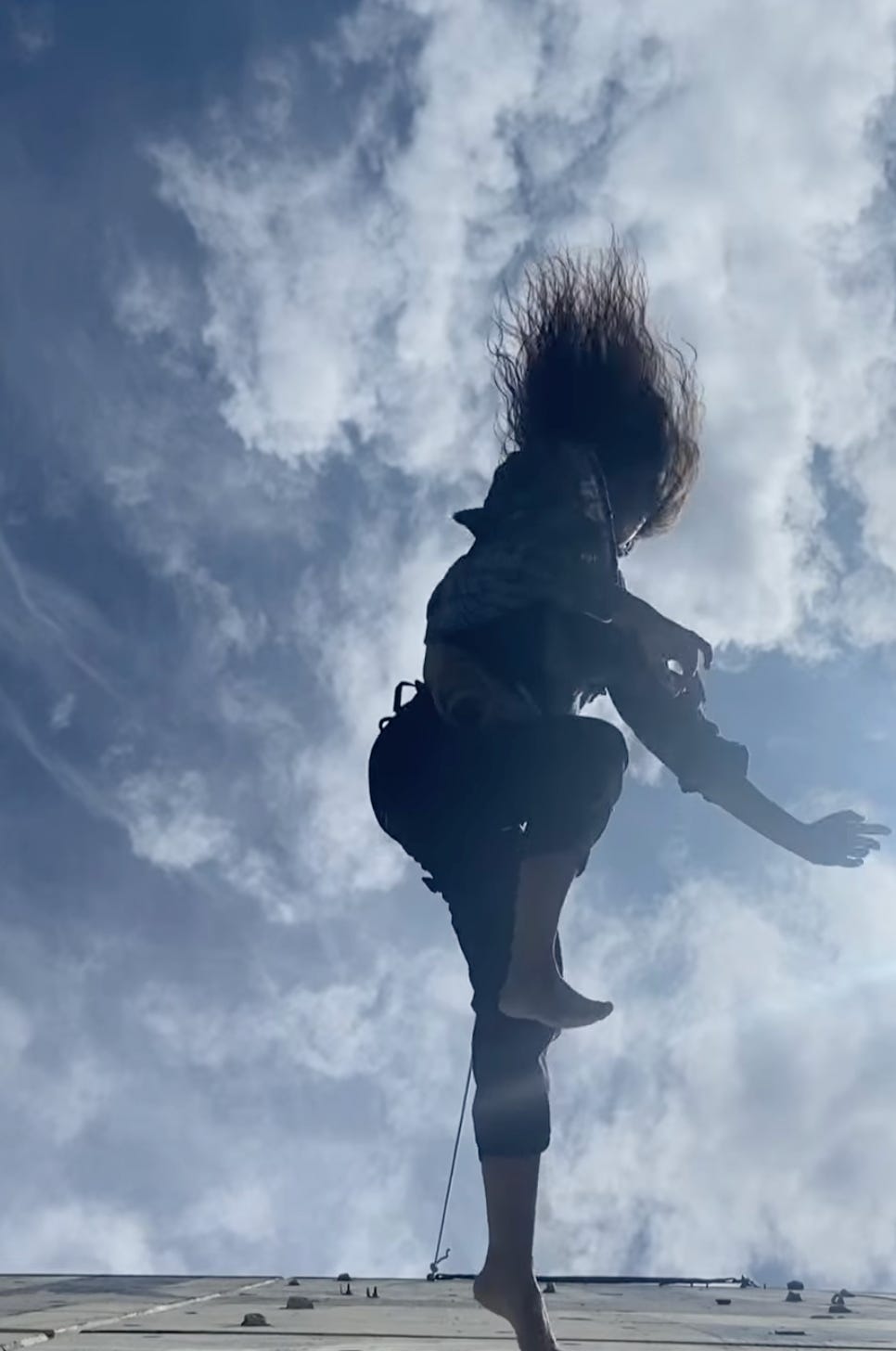
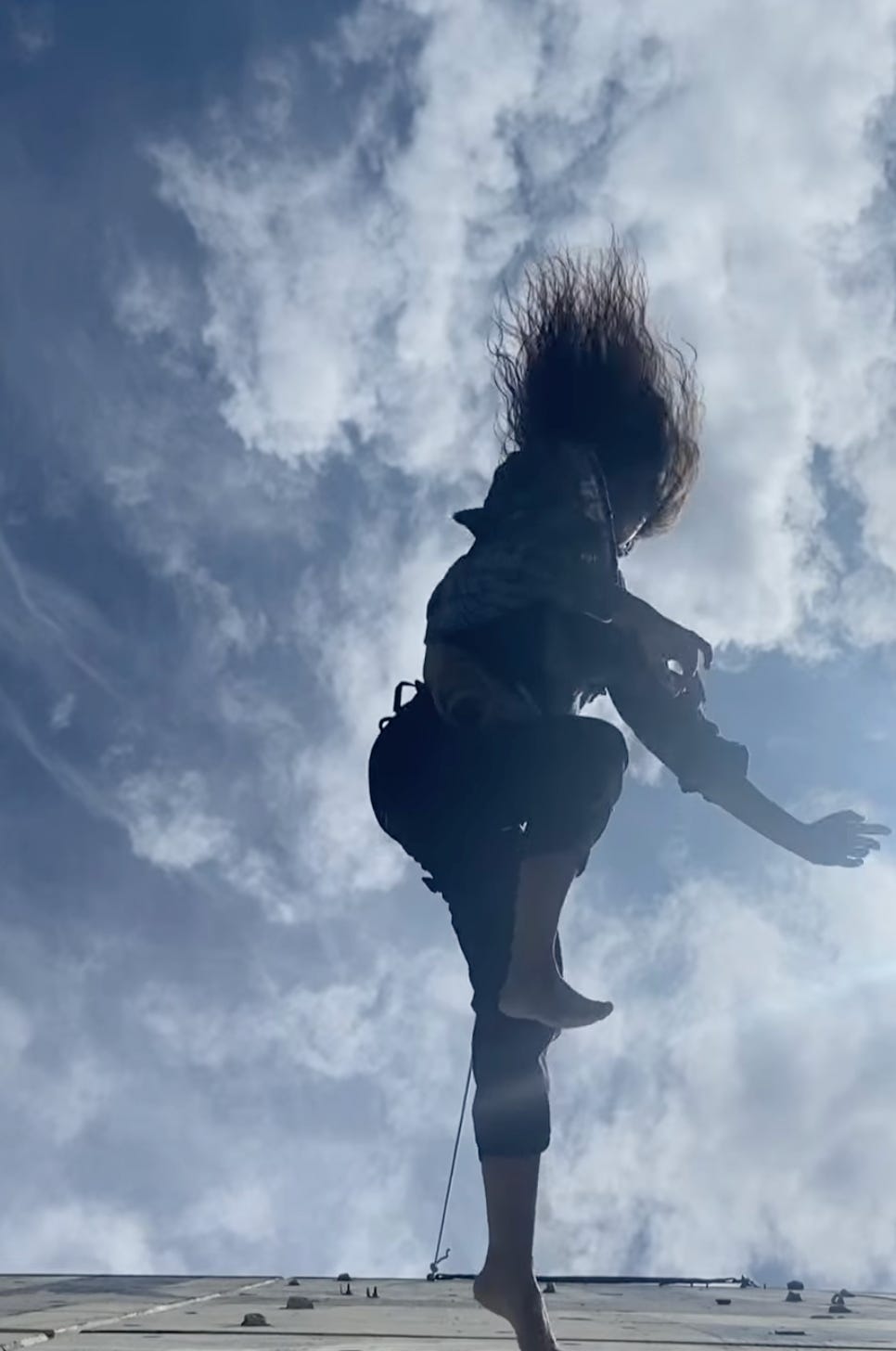
I am always mesmerised by performer and choreographer Alejandra Deza’s films, in which we witness the artist tethered to land yet moving, floating, indeed almost swimming between tangible and intangible realms with incredible grace and reverence - for both body and landscape. Her work explores the transformative potential of space with gentle yet powerful elegance.
“Being suspended from a rope makes me feel more connected than ever to myself and my surroundings.” - Alejandra Deza
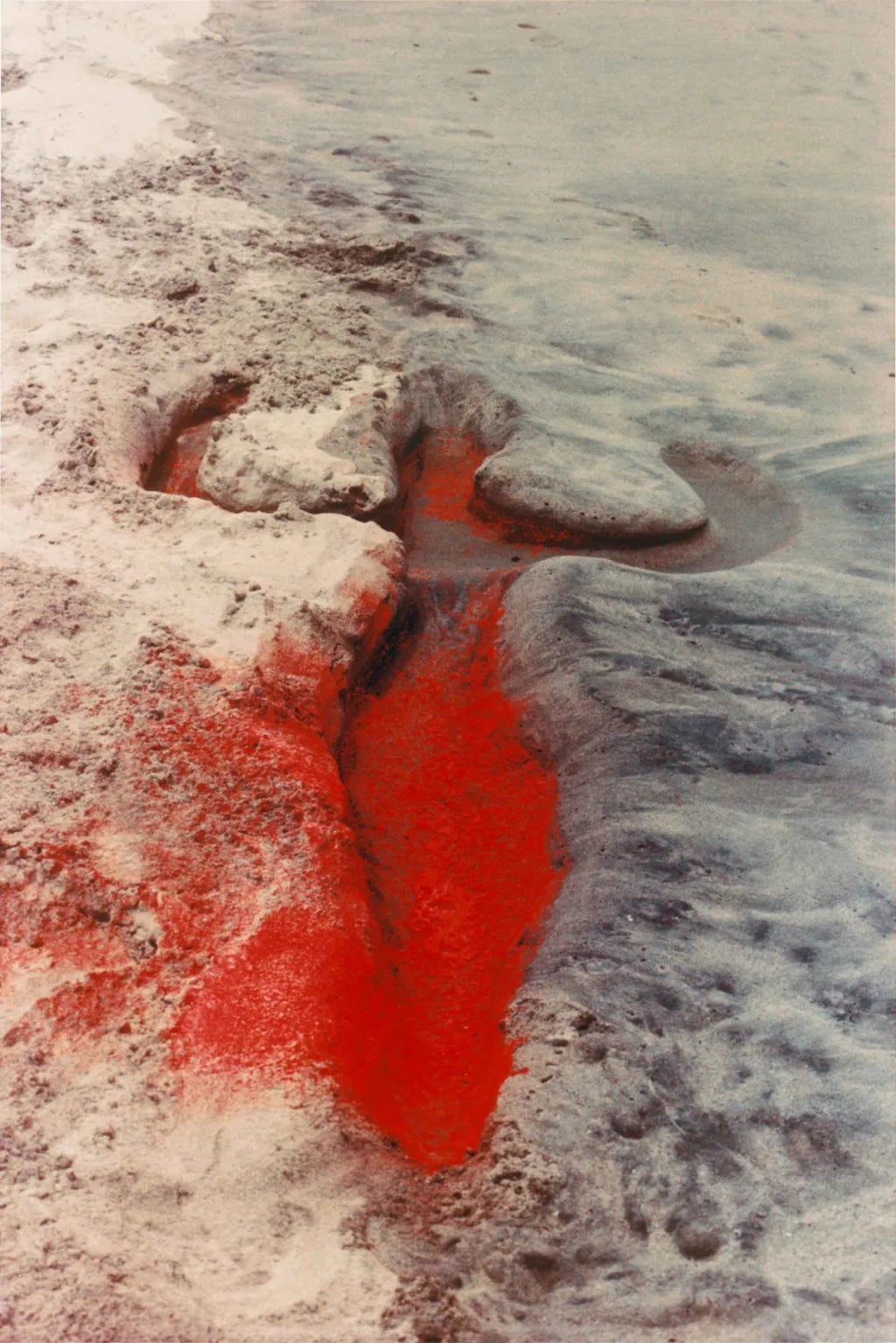
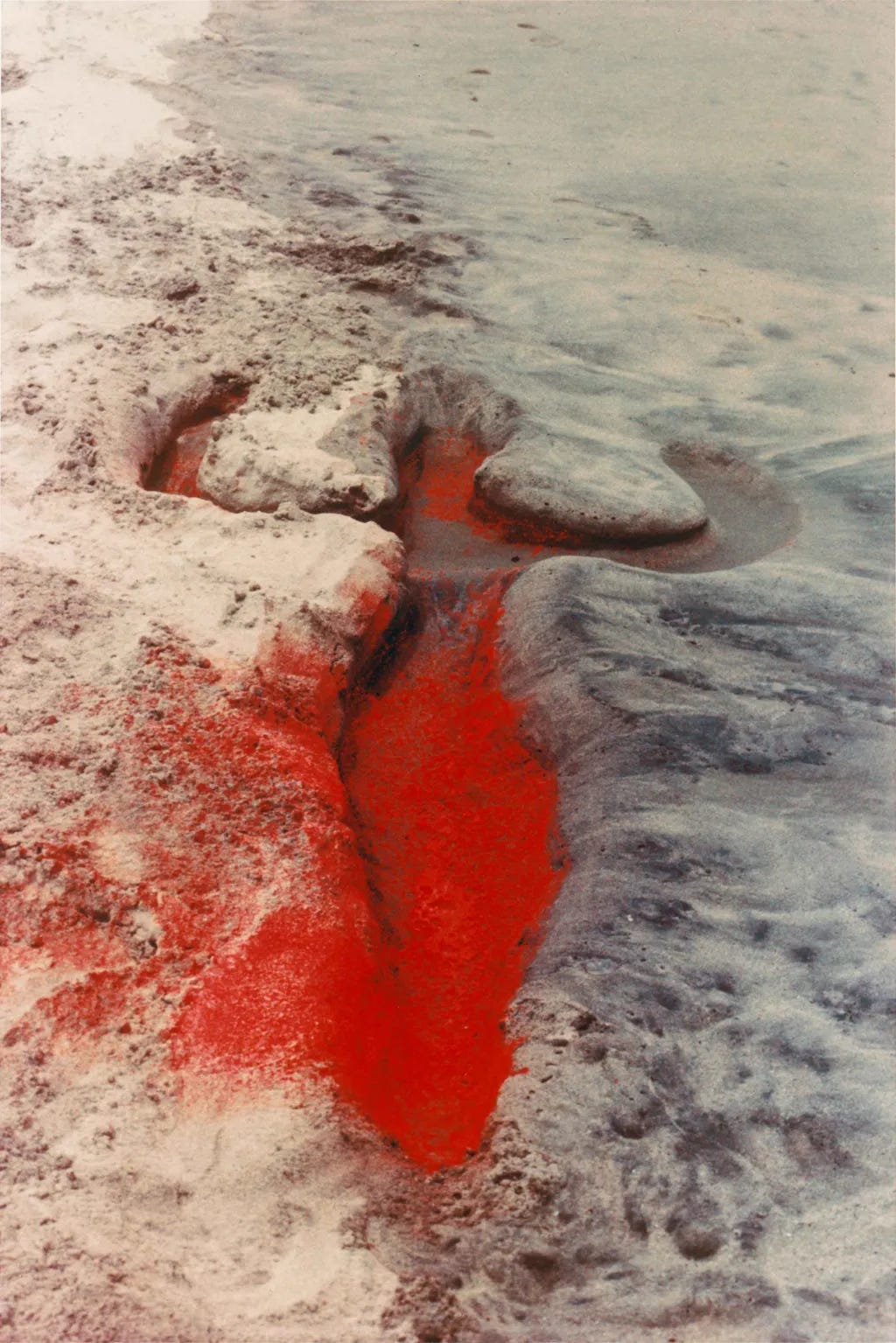
Artist Ana Mendieta’s ‘Connecting to the Earth’ series is very much inspiring the studio at the moment. Her work explores embodied connections to elements of landscape - mud, fire, water, ice. A form of drawing with land, the artist imprints her body as an embrace of the motherland, representing an emotional bond with the earth, which are then documented through film and photography. There is a great article on her practice by Where The Leaves Fall here.
“I have been carrying out a dialogue between the landscape and the female body (based on my own silhouette). I believe this has been a direct result of my having been torn from my homeland (Cuba) during my adolescence. I am overwhelmed by the feeling of having been cast from the womb (nature). My art is the way I re-establish the bonds that unite me to the universe. It is a return to the maternal source.”—Ana Mendieta
Untitled (1976), from series Silueta Works in Mexico 1973-1977 by Ana Mendieta
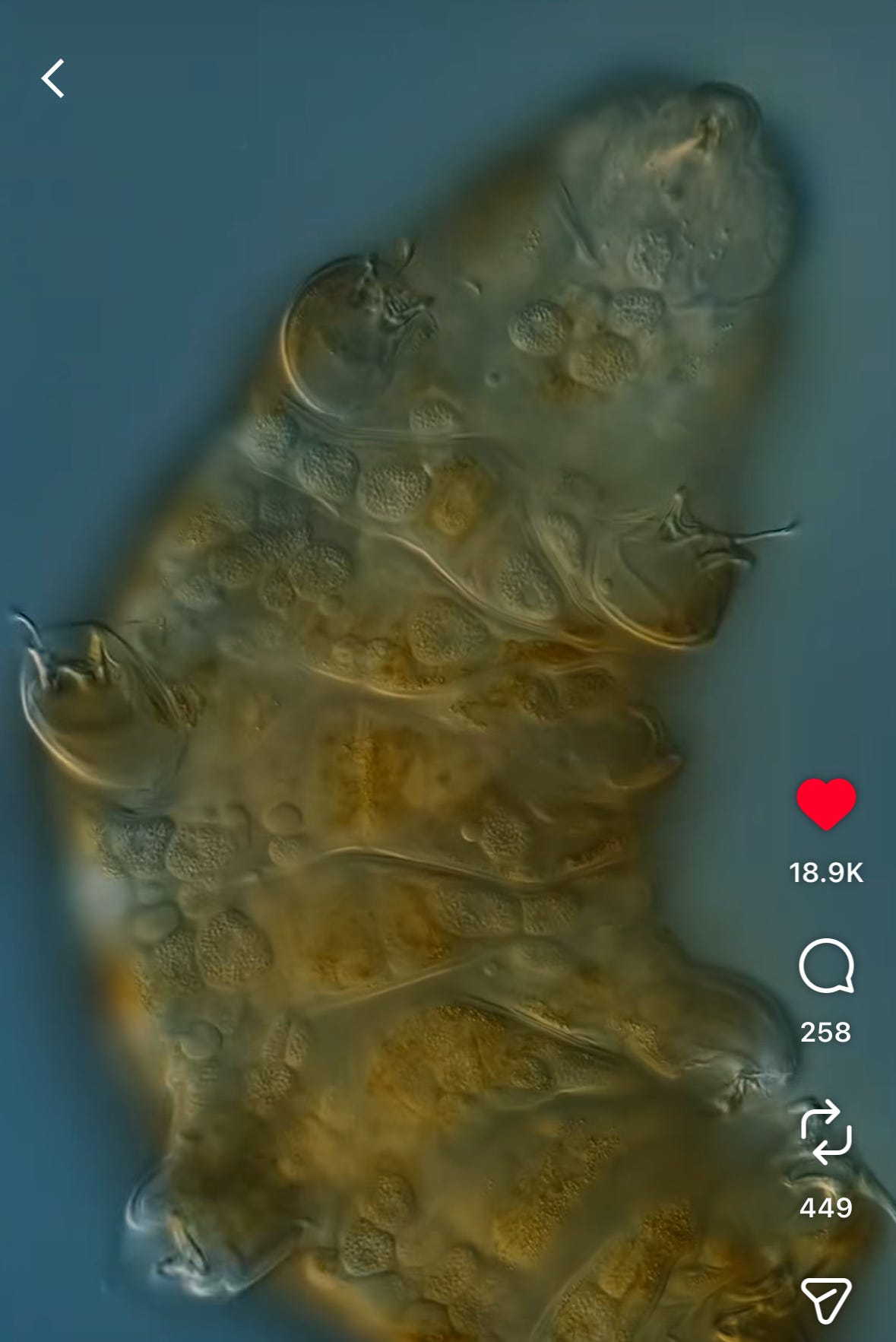
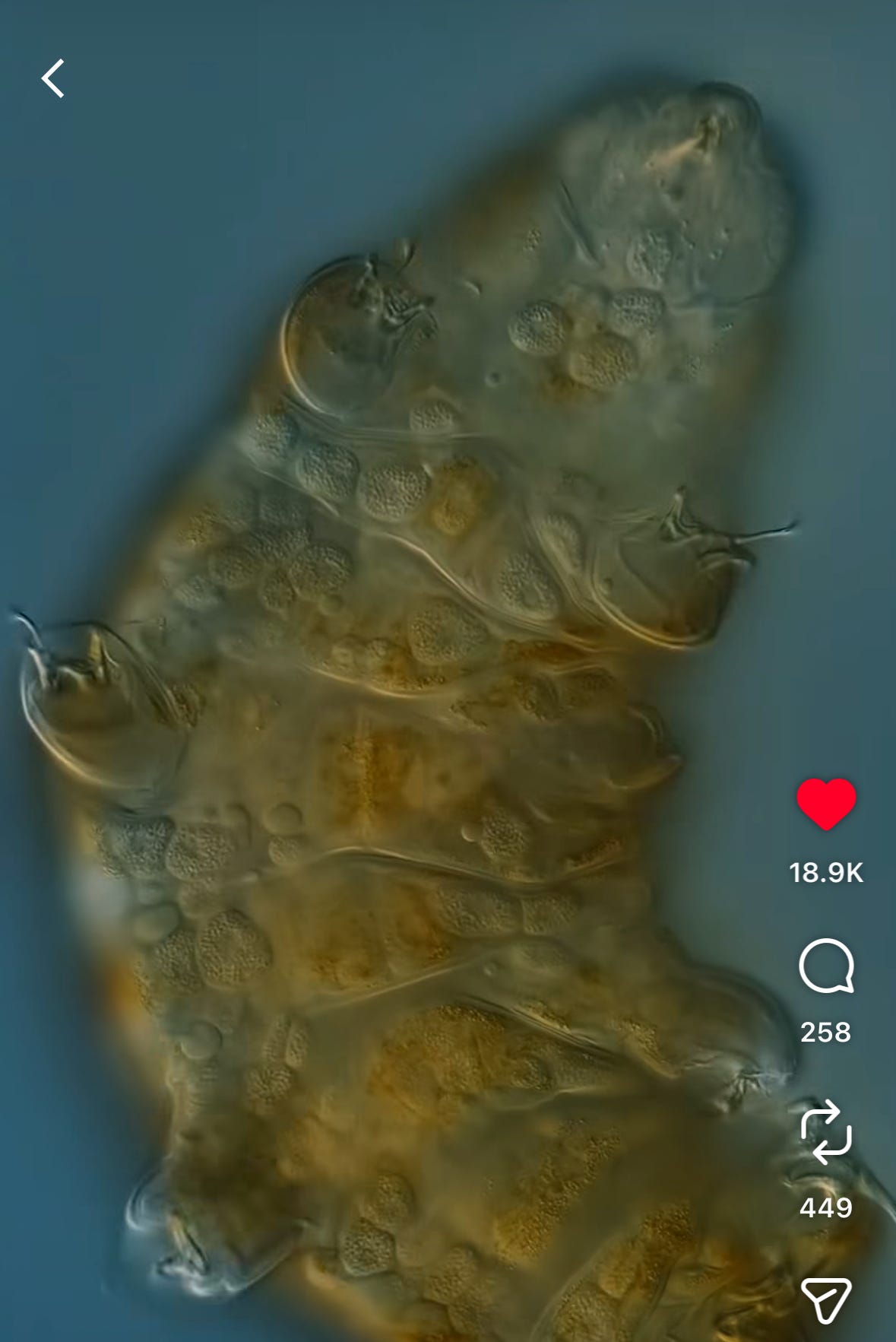
And finally, James Weiss’ Instagram Jam and Germs is a delight. I find his sharing of the microscopic world charming and fascinating, and felt such fondness for a particular post highlighting face mites - honestly! Our bodies are home to so many ecosystems, all the time. It’s amazing. Maybe start by checking out his footage of Tardigrades aka Water Bears, which James informs us can survive decades without water by turning into tiny capsules.
Still from film captured by James Weiss
March Wild Drawing: soundscapes
A gentle reminder: Wild Drawing is simple, imperfect and experimental. This practice is not about making pretty pictures. What matters most of all is how it feels.
All you need is:
Paper or sketchbook
A pen or pencil
To be outside
3 - 5 minutes
Instructions:
Find a spot where you can sit or stand for a few minutes - undisturbed and safe to close your eyes.
Open your sketchbook and place your pencil or pen in the centre of the page. This is You - your place within the landscape. You may want to jot a cross in the centre to mark your position.
Then, close your eyes and tune into your sense of hearing.
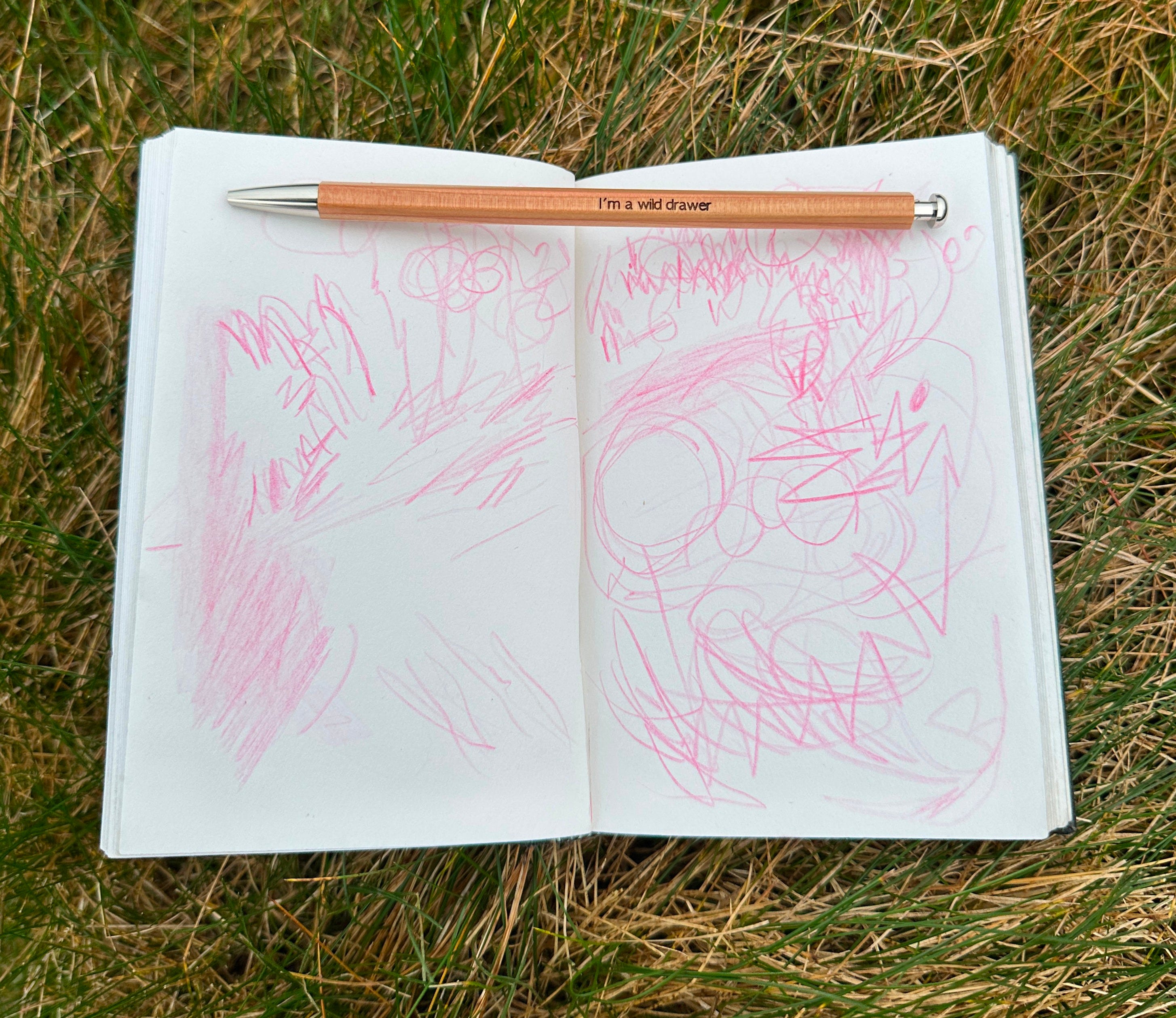
Using your pencil, begin to mark down the sounds that immediately come to your attention. Try out different shapes, pressures, speeds of mark-making to represent the different sounds you hear. Perhaps background traffic is noted as straight lines or shadings. Maybe bird song twirls or ripples across the page. Explore how the breeze sounds through shape…
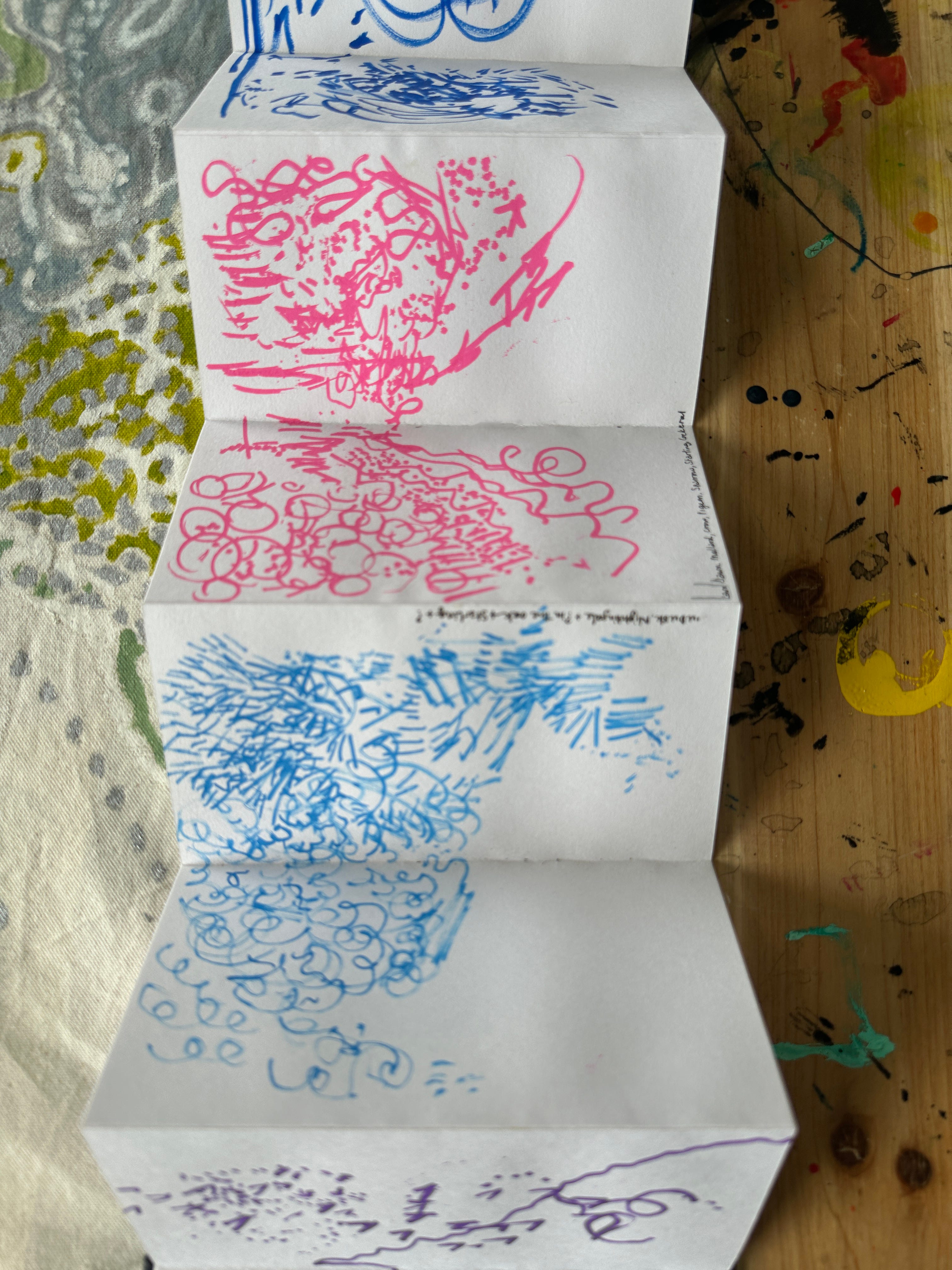
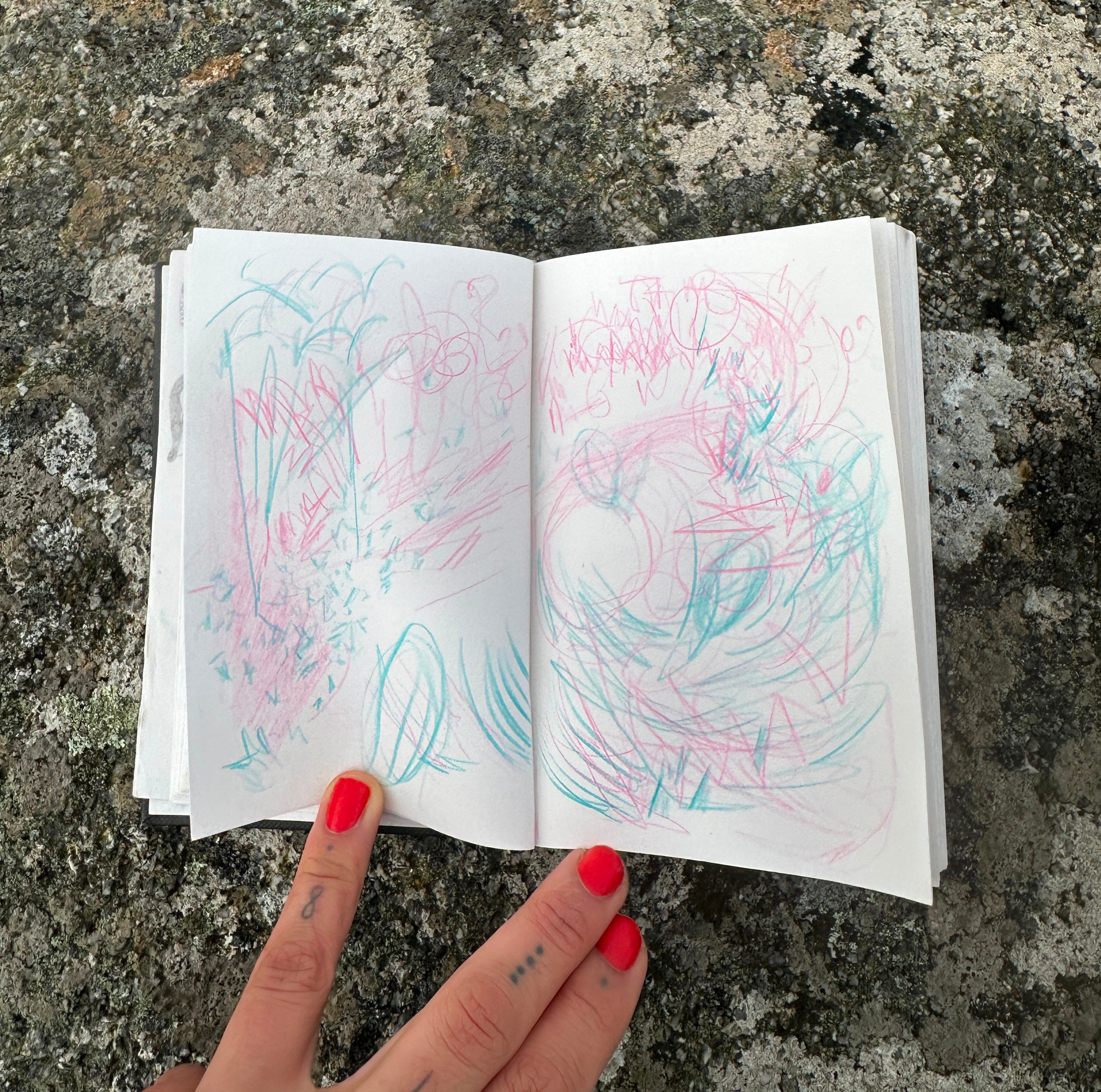
soundscape in pink at the bottom of Carn Brae in Cornwall
As you make the marks, orientate them on the page in relation to their distance and direction of arrival to you in the centre of the page. So, for example, if I can hear human’s chattering in front of me I would record those sounds at the top of my sheet of paper. If I hear seagulls calling from a distance on my left, those marks would be appear on the left-hand edge of my page. Should a dog bark close behind me, I would record that noise near to and just below the centre of the page.
soundscape at the top of Carn Brae in blue, overlaying the earlier pink soundscape.
Gradually, a cacophony of shapes will emerge and, as you listen longer, you will find that new sounds draw your attention - sounds you may have missed before. Layers of marks will build and you may find that your drawing becomes fast-paced depending on the dynamism of the soundscape surrounding you.
Allow it to unfold.
Do not worry about what the finished drawing will look like.
Try not to peek until you are finished; wild drawing is not about making pretty pictures but about heightening our awareness of environment, our place within it and what our bodies are absorbing from it.
Keeping our eyes closed empowers other senses to lead. I find that the longer that you give that sense time to adjust to being your body’s primary channel for noticing, the greater the depth of detail it will convey. This is a seriously relaxing exercise and it doesn’t need to be solely practiced outdoors. Honestly, sometimes when I’m feeling overwhelmed I turn to this practice just to come back to what is real, what is present and what is in motion around me. It’s great in situations where visual stimulus can be overly demanding - like cities. (Though, as I note at the top, it is important that you feel comfortable closing your eyes for a few minutes in whatever environment you try this in.)
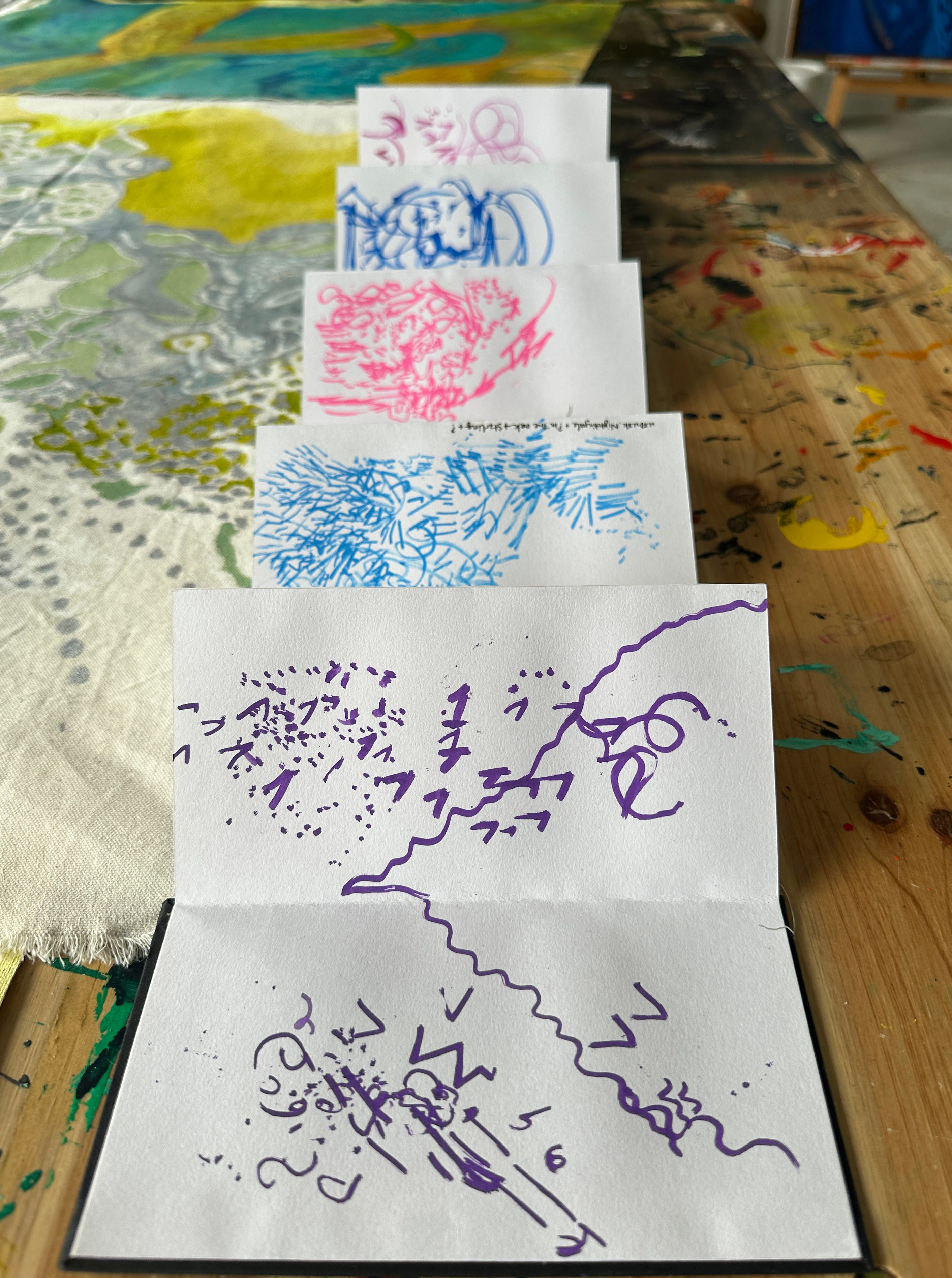
‘Here’s one I made earlier’, a week of recording the dawn and dusk chorus:
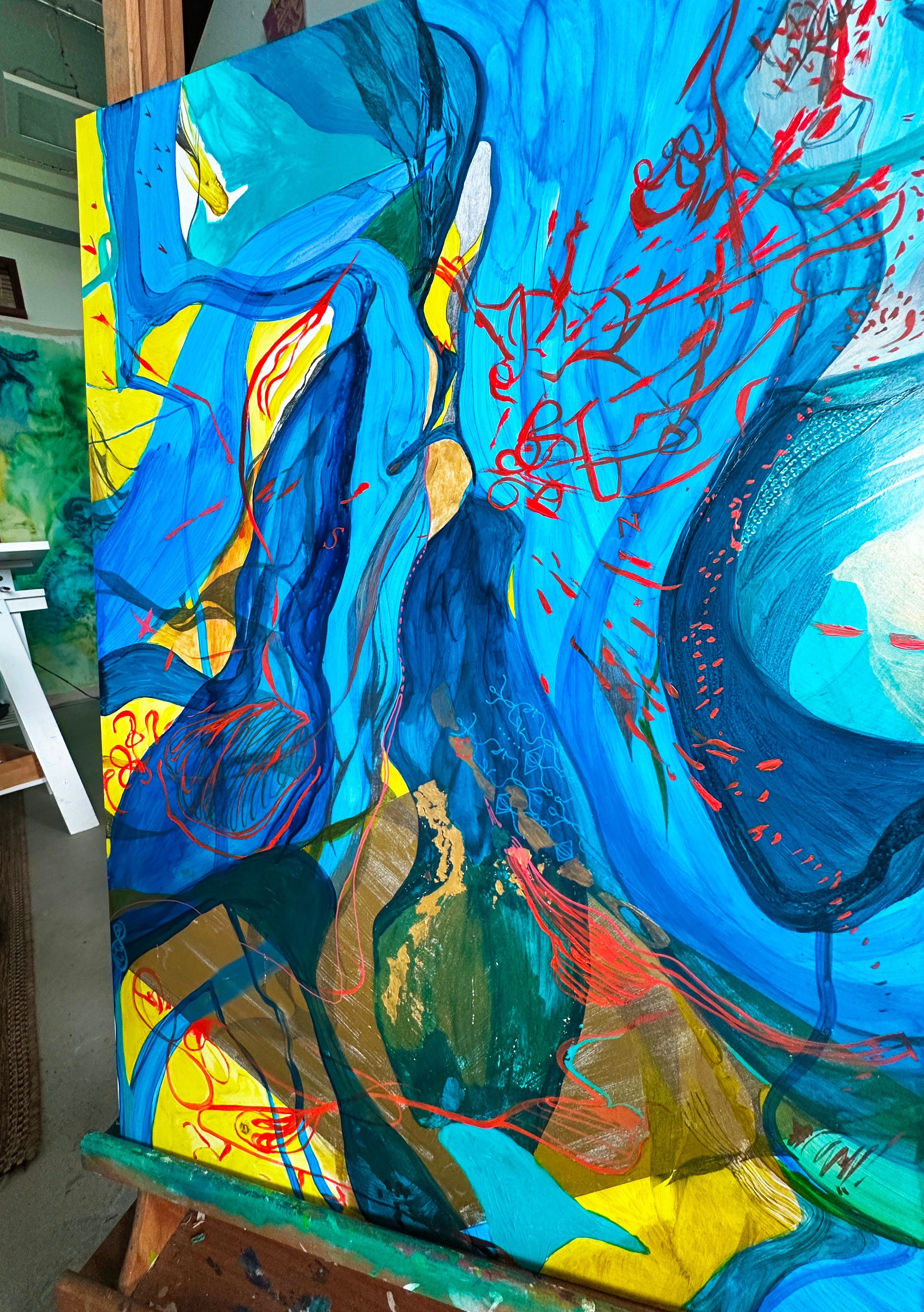
And here is an example of how I sometimes transfer these drawings into paintings - a work very much still in progress but here you can see a layer of soundscape (in red) collected from Pett Level beach:
Bx
Thanks for reading Embodied Ecology! Subscribe for free to receive new posts and support my work.